

Behavioral Health Prior Authorization Information
Effective 7/1/26, prior authorization will be required once specified annual or consecutive-day service thresholds are met for designated behavioral health rehabilitation and SUD services, including: Therapeutic Behavioral Services, Community Psychiatric Support Treatment, Psychosocial Rehabilitation, Intensive Outpatient Program services, and withdrawal management services. See the grid below.
Prior Authorization Requests
Authorization requests should be submitted in advance of anticipated threshold exhaustion and must include sufficient clinical documentation to support medical necessity, including updated treatment plans, measurable goals, rationale for requested service intensity, and documentation of progress or ongoing treatment need.
Standard authorization requests will generally be processed within seven (7) calendar days, while designated withdrawal management services requiring expedited review will have a 48-hour turnaround timeframe.
Providers should continue to coordinate care when members are receiving services from multiple agencies to prevent duplication of services and premature exhaustion of authorized units.
Exclusions: services billed with the KX crisis modifier, qualifying TBS nursing services, and children/youth enrolled in OhioRISE or in the custody of an Ohio Public Child Welfare Agency.
Determining the Number of Units
We are pleased to announce the successful, on-schedule production deployment of the Behavioral Health – Service Benefit Counter. Now available in the Buckeye web portal in the Behavioral Health environment.
This new capability enhances the provider experience by delivering improved visibility into benefit utilization and service counter information, helping support greater transparency and informed decision-making. The deployment was completed successfully and is now available in production.
If you have questions, please contact Provider Services at 866-296-8731.
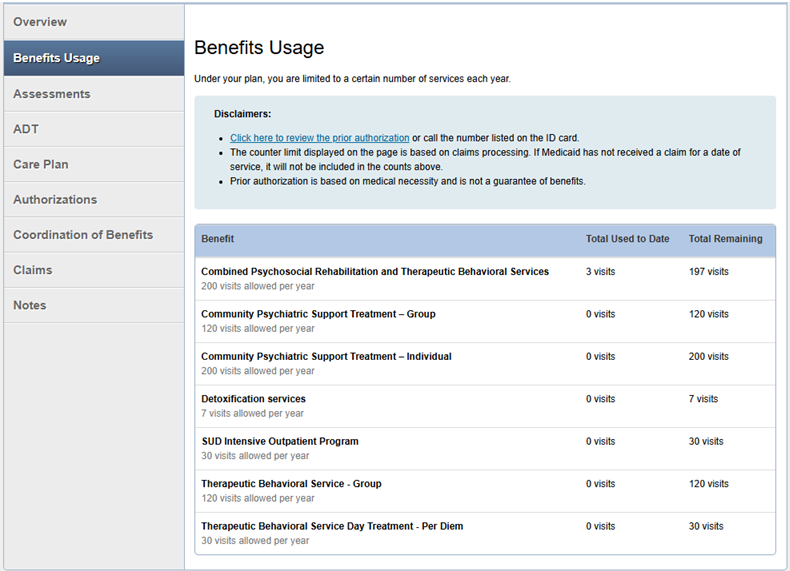
Table A-1: New Services Subject to Utilization Management
This appendix defines the utilization management thresholds and authorization turnaround times for select behavioral health and substance use disorder services. These requirements apply across all provider guidance documents and are separate from daily unit limits or same-day billing rules.
Service Name | Purpose
| Key Medical Necessity Criteria | Typical Activities | Threshold Requiring Prior Authorization | Expected Turnaround Time |
Therapeutic Behavioral Service – Individual H2019 | Goal-directed interventions for behavioral/emotional needs. | Linked to treatment plan goals; clinically appropriate; addresses behavioral/emotional needs. | Strengths-based planning, strategy identification, emotional/behavioral management, social skills restoration, crisis prevention. | After 200 units (50 hours) per calendar year, combined across TBS and PSR | 7 calendar days |
Therapeutic Behavioral Service – Group H2019 HQ | Goal-directed interventions for behavioral/emotional needs. | Linked to treatment plan goals; clinically appropriate; addresses behavioral/emotional needs. | Strengths-based planning, strategy identification, emotional/behavioral management, social skills restoration, crisis prevention. | After 120 units (30 hours) per calendar year | 7 calendar days |
Therapeutic Behavioral Service Day Treatment – per diem H2020 | Goal-directed interventions for behavioral/emotional needs. | Linked to treatment plan goals; clinically appropriate; addresses behavioral/emotional needs. | Strengths-based planning, strategy identification, emotional/behavioral management, social skills restoration, crisis prevention. | After 30 units per calendar year | 7 calendar days |
Community Psychiatric Support Treatment – Individual H0036 | Community-based psychiatric support to improve functioning and stability. | Mental health diagnosis with functional impairment; needs skill development, symptom monitoring, crisis support, or linkage. | Needs assessment, daily living skills, ISP coordination, symptom monitoring, crisis stabilization, advocacy. | After 200 units (50 hours) per calendar year | 7 calendar days |
Community Psychiatric Support Treatment – Group H0036 HQ | Community-based psychiatric support to improve functioning and stability. | Mental health diagnosis with functional impairment; needs skill development, symptom monitoring, crisis support, or linkage. | Needs assessment, daily living skills, ISP coordination, symptom monitoring, crisis stabilization, advocacy. | After 120 units (30 hours) per calendar year | 7 calendar days |
Psychosocial Rehabilitation Service H2017 | Rehabilitation to restore daily functioning and routines. | Mental health diagnosis with functional deficits; interventions tied to treatment plan. | Skill restoration for home, school, work; coping strategies; community integration. | After 200 units (50 hours) per calendar year, combined across TBS and PSR | 7 calendar days |
SUD Ambulatory Withdrawal Management H0012, H0014 | Structured, clinically supervised withdrawal management services provided in an ambulatory setting to support safe stabilization from substance withdrawal without the need for residential or inpatient care.
| Member meets ASAM criteria for ambulatory withdrawal management, requires monitoring and support based on withdrawal severity and risk, and services are clinically appropriate for treatment at a non‑residential level of care.
| Clinical assessment and monitoring of withdrawal symptoms, medication management as clinically indicated, and coordination of care to support stabilization and transition to the next appropriate level of care.
| After the 7th consecutive day of services | 48 hours |
SUD Intensive Outpatient Program H0015 | Structured outpatient treatment for SUD; multiple hours per day, several days per week. | Meets ASAM Level 2 criteria; clinically appropriate intensity; not concurrent with other SUD levels; documented in ITP. | Group and individual therapy, psychoeducation, relapse prevention, skill-building. | After 30 units per calendar year | 7 calendar days |
SUD Residential – Clinically Managed Withdrawal Management H0010 | Structured, 24‑hour clinically managed withdrawal management services provided in a residential setting to support safe stabilization from substance withdrawal when ambulatory services are not clinically appropriate.
| Member meets ASAM criteria for residential, clinically managed withdrawal management, requires 24‑hour monitoring based on withdrawal severity and risk, and services are clinically appropriate at a residential level of care.
| Ongoing clinical assessment and monitoring of withdrawal symptoms, medication administration as clinically indicated, and coordination of care to support stabilization and transition to the next appropriate level of care.
| After the 7th consecutive day | 48 hours |
SUD Residential – Medically Managed Withdrawal Management H0011 | Structured, 24‑hour medically managed withdrawal management services provided in a residential setting to support safe stabilization from substance withdrawal when clinical complexity requires physician‑directed care.
| Member meets ASAM criteria for medically managed withdrawal management, requires 24‑hour medical monitoring and management due to withdrawal severity or co‑occurring medical conditions, and services are clinically appropriate at a residential level of care.
| Ongoing medical and clinical assessment and monitoring of withdrawal symptoms, physician‑directed medication management, and coordination of care to support stabilization and transition to the next appropriate level of care.
| After the 7th consecutive day | 48 hours |
Important Notes
- Prior authorization thresholds apply on a calendar-year basis unless otherwise specified.
- Combined thresholds apply across services where indicated.
- Daily unit limits, same-day billing rules, and non-duplication requirements continue to apply and are addressed elsewhere in provider guidance.
- Authorization decisions are based on medical necessity and compliance with Ohio Medicaid requirements.
1) What are Therapeutic Behavioral Services (TBS)?
Therapeutic Behavioral Services (TBS) are individualized, goal‑directed behavioral health interventions designed to reduce and manage behavioral or emotional symptoms and improve functioning in the community. TBS interventions must be tied to clearly defined goals and objectives in the individualized treatment plan (ITP) and delivered in accordance with Ohio Medicaid requirements (OAC 5160‑27‑08).
2) What is Psychosocial Rehabilitation (PSR)?
Psychosocial Rehabilitation Services (PSR) are rehabilitative behavioral health services that assist individuals in restoring and developing skills necessary for successful functioning in home, school, work, and community settings. PSR focuses on functional skill development and implementation of treatment plan interventions (OAC 5160‑27‑08).
3) Who can provide TBS and PSR?
TBS and PSR must be delivered by qualified behavioral health professionals who are employed or contracted by an Ohio Medicaid‑enrolled provider organization and who meet staff qualification and supervision requirements outlined in Ohio Administrative Code (OAC 5160‑27‑08).
4) What are the billing codes and when is prior authorization required for TBS and PSR?
TBS and PSR are subject to utilization management based on cumulative calendar‑year units. Prior authorization is required after the following thresholds are reached:
- TBS – Individual (H2019): Prior authorization is required after 200 units (50 hours) per calendar year, combined across TBS and PSR.
- TBS – Group (H2019 HQ): Prior authorization is required after 120 units (30 hours) per calendar year.
- TBS Day Treatment – per diem (H2020): Prior authorization is required after 30 units per calendar year.
- PSR (H2017): Prior authorization is required after 200 units (50 hours) per calendar year, combined across TBS and PSR.
When prior authorization is required, requests are reviewed within 7 calendar days, consistent with Ohio Medicaid prior authorization requirements (OAC 5160‑8‑05).
5) What are the medical necessity criteria for TBS and PSR?
TBS and PSR are medically necessary when all of the following apply:
- The individual has documented behavioral, emotional, or functional needs;
- Services are clearly linked to goals and objectives in the individualized treatment plan;
- Interventions are clinically appropriate to address identified needs; and
- Services are not duplicative of other interventions.
TBS focuses on behavioral and emotional interventions, while PSR focuses on restoration and implementation of functional skills. Both services must be delivered consistent with medical necessity standards outlined in Ohio Administrative Code (OAC 5160‑27‑08) and general Medicaid coverage requirements (OAC 5160‑27‑02).
6) When are TBS and PSR reimbursable?
TBS and PSR are reimbursable when they are:
- Medically necessary;
- Authorized under a current individualized treatment plan; and
- Delivered in accordance with Ohio Medicaid service, documentation, and billing requirements (OAC 5160‑27‑02; OAC 5160‑27‑08).
7) What documentation is required for TBS and PSR?
Providers must maintain documentation that includes:
- A current individualized treatment plan;
- Separate progress notes for each service;
- Start and stop times;
- Clinical justification demonstrating medical necessity; and
- Evidence the service is tied to treatment plan goals.
Documentation must support compliance with Ohio Medicaid documentation and coverage requirements (OAC 5160‑27‑02; OAC 5160‑8‑05).
8) Are exceptions ever allowed?
Exceptions to prior authorization thresholds or daily unit limits may be approved on a case‑by‑case basis by Utilization Management when supported by clear clinical documentation and medical necessity (OAC 5160‑8‑05).
9) Where can providers find utilization management thresholds?
Utilization management thresholds and authorization timelines are defined in Appendix A, Table A‑1: New Services Subject to Utilization Management and apply across all provider guidance documents.
10) Who should providers contact with questions?
Providers may contact:
- Buckeye Health Plan Provider Services at 866‑296‑8731, or
- Their assigned Provider Engagement Administrator for questions related to TBS or PSR coverage, authorization, or billing.
This FAQ is intended as guidance and does not replace Ohio Medicaid rules or provider contract requirements.
This Frequently Asked Questions (FAQ) document provides guidance on coverage, prior authorization, documentation, and billing requirements for Community Psychiatric Support Treatment (CPST) and Psychosocial Rehabilitation Services (PSR).
The information below aligns with Ohio Medicaid requirements and Buckeye Health Plan utilization management standards. Governing rules include:
- OAC 5160 27 02 (Coverage and limitations)
- OAC 5160 27 08 (Mental health TBS and PSR)
- OAC 5160 8 05 (Prior authorization standards)
1) What is Community Psychiatric Support Treatment (CPST)?
Community Psychiatric Support Treatment (CPST) is a community based psychiatric support service provided to individuals with a mental health diagnosis and associated functional impairment.
CPST focuses on:
- Ongoing symptom monitoring and support
- Skill development related to daily living
- Crisis prevention and stabilization
- Coordination with the individualized service plan (ISP)
- Advocacy and linkage to community resources
CPST services must be clinically appropriate, medically necessary, and clearly tied to treatment plan goals, consistent with OAC 5160 27 02 and OAC 5160 27 08.
2) What is Psychosocial Rehabilitation Service (PSR)?
Psychosocial Rehabilitation (PSR) is a rehabilitative behavioral health service designed to help individuals restore and improve skills necessary for independent living, social integration, and recovery.
PSR focuses on:
- Skill restoration and skill implementation
- Development of coping strategies and routines
- Community integration and role functioning
- Rehabilitation of functional deficits related to mental illness
PSR interventions must be goal directed, non duplicative, and supported by the individualized treatment plan, in accordance with OAC 5160 27 08.
3) Are CPST and PSR covered services?
Yes. CPST and PSR are covered Ohio Medicaid services when all of the following are met:
- The member has a qualifying mental health diagnosis
- Services are medically necessary
- Services are clearly linked to ISP goals
- Services are delivered by qualified providers
These coverage requirements are defined under OAC 5160 27 02 and OAC 5160 27 08.
4) When is prior authorization required for CPST?
Prior authorization is required after the following calendar year thresholds are exceeded:
- CPST Individual (H0036):
o After 200 units (50 hours) per calendar year - CPST Group (H0036 HQ):
o After 120 units (30 hours) per calendar year
Authorization thresholds are applied in accordance with OAC 5160 27 02(B).
5) When is prior authorization required for PSR?
Prior authorization is required for PSR (H2017) after:
- 200 units (50 hours) per calendar year, combined with Therapeutic Behavioral Services (TBS)
This combined threshold reflects ODM’s authority to limit amount, scope, and duration of services under OAC 5160 27 02(B).
6) What does “combined threshold” mean?
A combined threshold means that units from multiple rehabilitative services are added together when determining whether prior authorization is required.
For example:
- Units billed for PSR (H2017) and TBS (H2019) are combined.
- Once the combined total reaches 200 units in a calendar year, prior authorization is required for continued services.
7) What is the prior authorization decision timeframe?
For CPST and PSR services requiring authorization:
- Authorization determinations are issued within 7 calendar days, consistent with Ohio Medicaid prior authorization standards under OAC 5160 8 05.
8) What documentation is required for CPST and PSR?
Providers must maintain documentation that includes:
- Separate progress notes for each service
- Clear linkage to ISP goals
- Clinical justification and progress toward goals
- Evidence of non duplication with other services
These expectations align with OAC 5160 27 08 and Buckeye audit standards.
9) What should providers do to avoid service disruptions?
Providers should:
- Monitor cumulative units throughout the calendar year
- Submit authorization requests before thresholds are exceeded, when possible
- Ensure treatment plans clearly support service intensity and duration
10) Where can providers find utilization management thresholds?
Utilization management thresholds and authorization timelines are defined in Appendix A, Table A‑1: New Services Subject to Utilization Management and apply across all provider guidance documents.
11) Who should providers contact with questions?
Providers may contact:
- Buckeye Health Plan Provider Services at 866‑296‑8731, or
- Their assigned Provider Engagement Administrator
Provider Services can assist with questions related to coverage, prior authorization, billing, and documentation requirements. Provider Engagement Administrators can support provider education, outreach, and escalation of operational concerns.
This FAQ is intended as guidance and does not replace Ohio Medicaid rules or provider contract requirements.
This Frequently Asked Questions (FAQ) document is intended to help providers understand coverage, prior authorization, documentation, and billing requirements for Substance Use Disorder (SUD) Intensive Outpatient Program (IOP) services. The information below aligns with Ohio Medicaid requirements and Buckeye Health Plan utilization management standards.
Governing rules include: OAC 5160‑27‑02, 5160‑8‑05, and 5160‑27‑09, and the ASAM Criteria (latest edition).
1) What is Intensive Outpatient Program (IOP)?
IOP is a structured substance use disorder treatment service that delivers multiple hours of clinically supervised therapeutic services per day, on multiple days per week, without requiring 24‑hour inpatient care. IOP meets ASAM Level 2 criteria and is reimbursed under Ohio Medicaid as a covered SUD level of care (OAC 5160‑27‑09).
2) Who is eligible for IOP services?
Members may be eligible for IOP when they:
- Have a diagnosed substance use disorder;
- Meet ASAM Level 2 criteria based on a multidimensional assessment (OAC 5160‑27‑09); and
- Require structured, scheduled treatment services to support stabilization, recovery, and relapse prevention.
IOP must be clinically appropriate and represent the right level of care, meaning it is not more or less intensive than necessary (OAC 5160‑27‑02; ASAM Criteria).
3) What is the billing code for IOP?
IOP services are billed using:
- H0015 – Alcohol and/or drug services; intensive outpatient treatment (per diem)
IOP is reimbursed as a per diem and includes program‑hour services delivered as part of the structured IOP schedule, consistent with Ohio Medicaid reimbursement policy (OAC 5160‑27‑09).
4) When is prior authorization required for IOP?
Prior authorization is required for IOP services after 30 units per calendar year, in accordance with Buckeye Health Plan utilization management policy and Ohio Medicaid prior authorization requirements (OAC 5160‑8‑05).
- Authorization requests are reviewed within 7 calendar days.
- Continued stay authorization is based on ongoing medical necessity and continued eligibility under ASAM Level 2 criteria (OAC 5160‑27‑09).
Note: The 48‑hour authorization timeframe applies only to Withdrawal Management services and does not apply to IOP.
5) What services are typically included in IOP?
IOP programs generally include a combination of:
- Group therapy
- Individual counseling
- Psychoeducation
- Skill‑building and relapse‑prevention activities
Services must be structured, scheduled, and delivered as part of the IOP program design, consistent with ASAM Level 2 expectations (OAC 5160‑27‑09; ASAM Criteria).
6) What documentation is required for IOP?
Providers must maintain documentation that includes:
- A current individualized treatment plan (ITP) supporting the need for IOP;
- Evidence the member meets ASAM Level 2 admission and continued stay criteria (OAC 5160‑27‑09);
- Progress notes demonstrating clinical necessity, participation, and response to treatment; and
- Clear start and end dates for the episode of care.
Documentation must support that IOP services are medically necessary and clinically appropriate in accordance with Ohio Medicaid requirements (OAC 5160‑27‑02).
7) Are services allowed concurrently with other SUD levels of care?
No. IOP cannot be billed concurrently with another mutually exclusive SUD level of care, such as residential treatment or partial hospitalization, unless explicitly allowed under Ohio Medicaid policy (OAC 5160‑27‑09; ASAM Criteria).
8) Are exceptions ever allowed?
Exceptions to coverage rules or limits may be approved on a case‑by‑case basis by Utilization Management when supported by clear clinical documentation and medical necessity (OAC 5160‑8‑05).
9) Where can providers find utilization management thresholds?
Utilization management thresholds and authorization timelines are defined in Appendix A, Table A‑1: New Services Subject to Utilization Management and apply across all provider guidance documents.
10) Who should providers contact with questions?
Providers may contact:
- Buckeye Health Plan Provider Services at 866‑296‑8731, or
- Their assigned Provider Engagement Administrator for questions related to IOP coverage, authorization, or billing.
This FAQ is intended as guidance and does not replace Ohio Medicaid rules or provider contract requirements.
Reference Items
Transcription is AI-generated content may be incorrect
Brandi M. Hahn
Good morning, everybody.
So it looks like we have quite a few folks here for our open office hours. And we are just waiting for some more internal folks to make it. I don't have an agenda for today. You may have or share anything that, you know, might be helpful for other providers here. But like I said, we don't have an agenda for today. It is really just more of the open office hours for you to come.
Ask questions that you may have around the BH policy updates. We do have myself, who is the manager of behavioral health for Buckeye. We also have our UM manager and supervisor, as well as a few other departments here for support. So if you want to start by raising hands or you can submit a question to the chat, you could also do that.
But again, I don't have a formal agenda for today. This is really for you to ask any questions around the behavioral health policy updates or anything that you have around the new policy.
-------------
Hello, how do you pronounce your name? Is it Carissa?
Corisa Fickiesen
Uh, Carissa, yes.
Brandi M. Hahn
Carissa, Carissa, welcome to the meeting. Can you go ahead and pose your question?
Corisa Fickiesen
Where do I find thresholds?
Brandi M. Hahn
You can go to our BH Prior Auth website page and access the Policy and PA link. And basically it shows all of the thresholds and that's right down there. Yep. So these are the thresholds that were impacted by the new policy. So basically this is what you'll want to know.
And then it gives a little bit more of an explanation above that, if you wanted to look at that. So it just says that, you know, you're required to do a prior authorization for any of these services for BHSUD services for TBS, CPST, PSR, IOP, and then some withdrawal management services. So again, you have to monitor the services and all of that is listed below. And this is across the board for all of the managed care. So this is not just for Buckeye health plan. And you would have received the notification previously around that. You can also look specifically at the policy just to make sure that you understand what the codes are. So again, all of this is here at your fingertips.
---------------------------------------------------
If anybody has any specific questions around it, we can look at answering those.
-----------------------------------------------------
And again, make sure that you're looking at the BH Health prior authorization information. And it's specifically on our website so that you have all the most up-to-date information. So, Char, if you want to, oh, did you already click on it?
Charlene M. Brubaker
I clicked back to our BH website. Did you want to click on something else?
Brandi Hahn
Nope, that's exactly what I wanted.
So basically it talks about when it went effective, what the authorization requests look like, and that they're generally processed within seven calendar days.
And then again, you can look at any of the policies. There are links to those policies that you can review. There's a grid on there. And then we have some FAQs from some of our previous webinars and some of the questions that we've received internally. So we did put those out there as well. Also, you can, again, you can look at what the forms are. You can obtain those here.
And like I said.
There are just a lot of links in here for you to click. And if something just doesn't look right or you don't have that answer to your specific question, you can, excuse me, click on that green box where it says to submit a question before office hours and we will absolutely address it for you there.
Other questions, I see that Megan did answer some of your questions in the chat.
Charlene M. Brubaker
Here's also that quick reference guide that also gives you the additional information pertaining to those thresholds.
So that is out here on this page. You wouldn't also have to go over to that PA policy update. You could just get that through the quick reference guide.
I'll stop sharing.
Brandi M. Hahn
It looks like, um...
checking our chat. Again, I'm working off of 1 screen today. I apologize. Any other questions here? I'm not seeing anything in the chat. Megan is addressing those as we go. Anything that we've missed or anything that anybody has that you'd like to pose for the good of the group?
Charlene M. Brubaker
I did have a quick question for you, Brandi, and then for Kris. That prior authorization form that is out on our website, that's called the Community Behavioral Health Services Prior Auth it has a draft watermark. Do we have a current one that we need to update? Updated!
Charlene M. Brubaker
No problem. I just noticed that. I want to make sure we have the most current information out there. This has been fast and furious with ODM and getting this all implemented. So I know that we've got lots of updates most recently right before the go live.
Brandi M. Hahn
Yes, it has.
And again, if you don't think of anything till, you know, much later in the day or when you're laying in bed, please feel free to get on the site and pose that question and I will make sure to address it.
Charlene M. Brubaker
So using that community behavioral health authorization form to request. There was a question about where to submit that because on the form it doesn't have the phone number or fax number to submit the form.
So do we have a specific fax number for Buckeye to submit that form?
Jordan Jones
I can put that in the chat. The preferred method would be, like Megan said, through the portal or ability, but I will put the fax number in the chat if that's not working. (has been added to website)
Lisa Reed
I have a quick question in regards to faxing and using the website to set up the pre-authorization. Is it going to be the same timing or is 1 going to be faster than the other?
Charlene M. Brubaker
The preferred method is the portal and would get the quickest response, but we do have turnaround times for all of it that are the same.
Lisa Reed
Right.
Okay, thank you.
Charlene M. Brubaker
Did we manage, I think we managed to get through all the questions in the chat.
Brandi M. Hahn
Yeah, it appears so.
Charlene M. Brubaker
And Denise asked if this presentation will be available to them after the call. We're going to be posting the transcript to the web page that I shared, as well as the up-to-date PowerPoint from our previous webinar that we did will be uploaded to that page as well.
Brandi M. Hahn
Well, if there is nothing else, I think we made very good use of this time. And again, please feel free to reach out if you have a question that comes up after this meeting adjourns. And be sure to check the website for any up-to-date information.
And I thank you all for your patience and your hard work with these members. We know that it is a lot of work every day and appreciate what you do. And just like I said, let us know if there's anything that we can help answer. And provide you with. Thank you so much.
Charlene M. Brubaker
Thank you. Have a great day.
Brandi M. Hahn
Have a great day.
Meranda Murphy
Thank you.
Brandi M. Hahn
stopped transcription
TEAMS Chat
What is going to happen if previous providers submit claims late, impacting the benefit limit? For instance, we check the usage and move forward accordingly, however a provider submits claims from earlier dates after we begin working with the member.
When are we expected to start using the new forms?
Meranda Murphy
What is going to happen if previous providers submit claims late, impacting the benefit limit? For instance, we check the usage and move forward accordingly, however a provider submits claims from ea…
i was going to ask the same thing. Is the provider expected to call before EVERY SINGLE service? or if we are told the patient has all 30 units lefts we don't have to call again until we used the 30?
It's my understanding that PA's must be submitted 7 days prior to timing out, is that correct?
Display Name
It's my unerstanding that PA's must be submitted 7 days prior to timing out, is that correct?
Correct! This is to ensure the clinical information is updated to reflect member progress
How will MCOs share visit information between plans when a member switches and will MCOs honor a preauth from another plan?
Will we be able to back date an authorization request?
Meranda Murphy
Will we be able to back date an authorization request?
When you say "back date," do you mean if a prior auth is not requested timely, will a past-date be honored for review?
Yes - will you accept retro Auth requests or if units are miscounted or someone is off work, could I request an Auth today with a start date or 7/1 ?
When we receive a prior authorization will be se assigned an authorization number that will have to do out on our claims for those services.
D.West asked a question asking about an overview of the policy. I wasn't sure if this was answered?
Charlene.M.Brubaker@centene.com
To piggyback on Debbie's question, will MCOs not only honor another plans auth but allow that actual auth number on the claim
Meranda Murphy
Yes - will you accept retro Auth requests or if units are miscounted or someone is off work, could I request an Auth today with a start date or 7/1 ?
If the member has met the thresholds to need a prior authorization but the start date is missed, an administrative denial will be issued for untimely notification of the request which can be appealed
Are units counted only if they are processed and paid out?
When we request and receive an authorization for services will that authorization number have to go out on the claim form for those services as we bill for them.
Debbie Martin
When we receive a prior authorization will be se assigned an authorization number that will have to do out on our claims for those services.
Yes
Charlene M. Brubaker
Charlene.M.Brubaker@centene.com
Tracey Meininger
To piggyback on Debbie's question, will MCOs not only honor another plans auth but allow that actual auth number on the claim
No, if a member changes to a different MCO, the new MCO will have an auth number that reflects in their system. There will be a new auth number assigned
Display Name
Are units counted only if they are processed and paid out?
Units are counted based on claims submitted
Is there a fax# we can submit the IOP/BH PA's into?
So the MCO will automatically assign a new auth number if there is an existing auth in effect with another MCO and the member switches plan before the auth terms?
Display Name
Is there a fax# we can submit the IOP/BH PA's into?
The current process is for submissions to come through Availity or the Buckeye portal, per ODM. If there are issues with these portals, please connect with our Provider Engagement team for assistance.
Tracey Meininger
So the MCO will automatically assign a new auth number if there is an existing auth in effect with another MCO and the member switches plan before the auth terms?
Yes, each MCO has their own EMR system which would automatically assign an authorization number to each request that comes in. Should a TOC request come through, Buckeye would create an internal auth number for the new request to approve for TOC.
Per ODM, we are allowed to use the standard PA form for all MCO's. Where can we submit that form?
Shannon McFee
Per ODM, we are allowed to use the standard PA form for all MCO's. Where can we submit that form?
That can be found here: Ohio Medicaid and Health Plans For Providers | Buckeye Health Plan
Ohio Medicaid and Health Plans For Providers | Buckeye Health Plan
Buckeye Health Plan offers free online accounts for providers. Create yours and access the secure tools you need today.
Thank you for the overview!
To see if a prior authorization is needed go to our Pre Auth Check Tool.
For full details on the BH.OH.UM.15 Prior Authorization Update effective July 1, 2026, please see our PA & Policy Updates website page.
Click here to access BH.OH.UM.15 Community Behavioral Health and Withdrawal Management Services Policy
Behavioral Health Prior Authorization Request Forms can be used in the BHP Portal or Availity.
Community Behavioral Health Prior Authorization Form
Preferred submission method is via portal. If need to fax this form: 866-535-6974
Behavioral Health Prior Authorization Office Hours
The first Tuesday of every month from 10:00 a.m. Eastern, beginning September 1, 2026
Microsoft Teams meeting
Join: https://teams.microsoft.com/meet/251108874655492?p=zMQ40LW2Uv1H5Aeygr
Meeting ID: 251 108 874 655 492
Passcode: LX73uq26
Dial in by phone
+1 816-702-6560,,454645380# United States, Kansas City
Phone conference ID: 454 645 380#
To Submit A Question Before Office Hours
(if you need a quicker response, please indicate)